You bought it. They can still switch it off.
As an Amazon Associate, some links pay us a commission at no extra cost to you. Keeps this website free. Thank you.
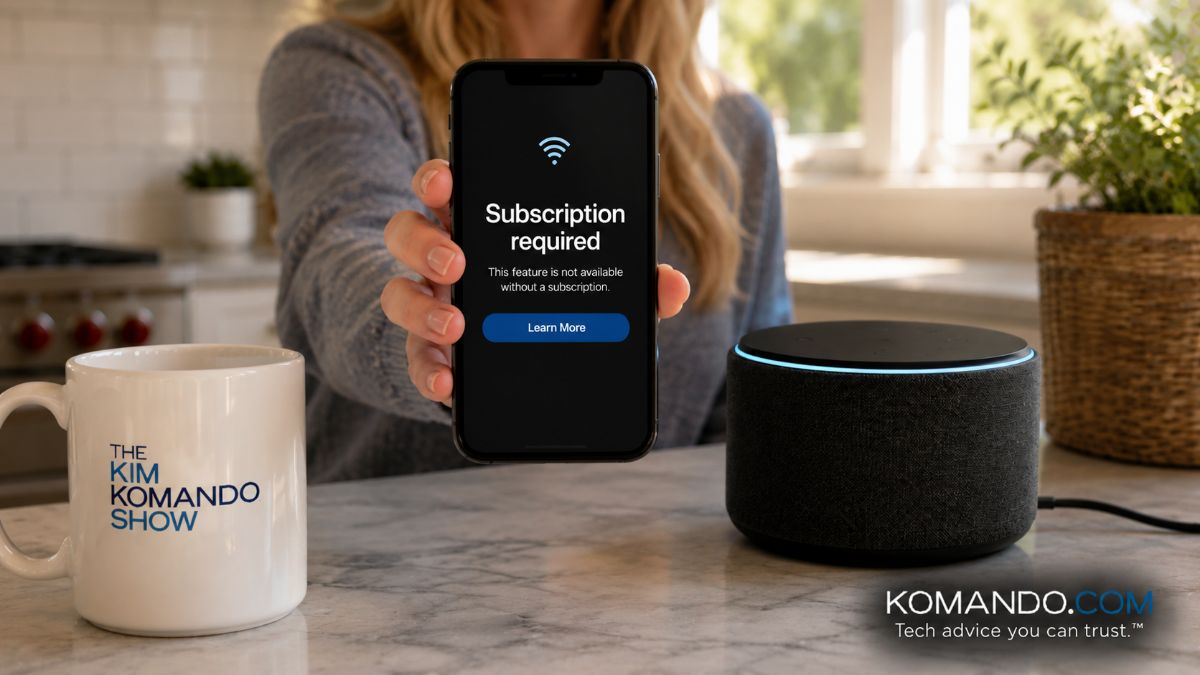
Companies are quietly bricking gadgets you already paid for or locking the features behind a subscription. Here’s how to spot the problem and how to buy around it.
⚡ TL;DR
- Paying full price for a gadget doesn’t mean you own it. Companies can kill features or shut devices down entirely after the sale.
- It’s happened to smart plugs, printers, car horsepower and more. One company even sent a surprise subscription bill to 30,000 customers.
- Here’s what to look for at checkout, so you control what you buy.
📖 Read time: 2 minutes
 ChatGPT/Kim Komando
I need your help: Add Komando.com as a preferred source on Google
You told your smart device to start the coffee. Nothing happened. It isn’t broken. The company killed the servers from a thousand miles away and turned your gadget into a paperweight. You paid full price. They still hold the off switch.
🔌 The stuff that stopped working
In January, Belkin pulled the plug on the cloud behind its Wemo smart home line. Overnight, the app, remote access and the Alexa and Google hookups died for older devices. Lighting schedules built over hours, smart plugs running a space heater, gone. The hardware was fine.
Belkin decided the servers weren’t worth keeping on. It gave six months’ notice and partial refunds but only for devices under warranty. Most folks had older gear. They got a shrug and a paperweight.
It gets bolder.
After going bankrupt, a smart home company called Futurehome hit roughly 30,000 customers with a mandatory $117-a-year subscription. Skip it, and a firmware update guts your hub to a manual switch.
HP sells subscription ink that stops printing the second you cancel, even with a full cartridge. No fax given. Mercedes charges a yearly fee to unlock horsepower your car already has built in. You bought a thing. They turned it into a toll booth.
So much of what you buy is hardware plus software on a leash the company holds. Consumer Reports found people expect a big appliance to last about 12 years. The makers won’t promise the smart features will survive even half that long.
🛒 How to buy so you keep control
You didn’t buy a gadget. You leased a hostage.
You can fight back at the checkout. Look for the Matter logo on smart home boxes. It means the device works across Apple, Google, Amazon and Samsung, so if one company bails, your gadget still runs on the others. Favor products with local control that run on your home network without phoning a server.
Here’s something no one really knows about.
A free, nonprofit tool called Home Assistant connects your lights, locks, cameras, thermostats and a thousand other gadgets into one dashboard, no matter the brand. The best part? It runs entirely on your own network, so data stays in your house instead of getting shipped off to some company’s cloud to be sold, sliced and monetized.
FYI, you will need something to run it on (a cheap Raspberry Pi, an old mini PC, or their plug-and-play box), and there’s an optional paid Cloud tier if you want remote access or Alexa and Google voice control. But local control? Not one dime. It’s built by a nonprofit fighting for your privacy, not your wallet.
Why did the smart house go to the doctor? It had a window pane.
📩 Send this to someone who kitted out their whole house with smart plugs and bulbs.