Anthropic just published a bombshell report on AI and jobs. Here’s what the chart means for you.
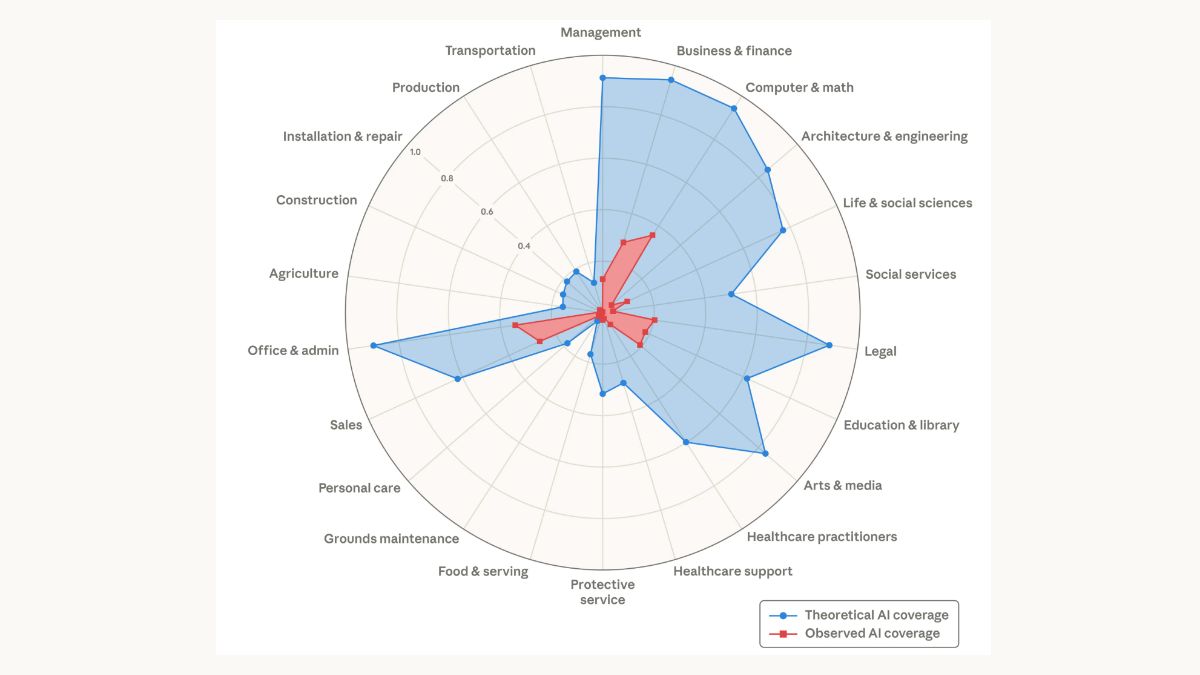
The blue area is what AI could do. The red area is what it’s actually doing. That gap is the most important thing you’ll look at today.
⚡ TL;DR Key takeaways
- Anthropic published landmark research on AI’s real impact on jobs.
- AI can theoretically handle the majority of tasks in most white-collar fields. It’s only doing a fraction right now.
- The most at-risk workers aren’t the ones you’d expect.
📖 Read time: 3 minutes




 Anthropic
I need your help: Add Komando.com as a preferred source on Google
I stopped scrolling when I saw this chart. I know what a real signal looks like buried inside a research report most people will never read. This one matters.
Anthropic published a landmark study on what AI is doing to jobs. Not the hype. The data. And there’s a chart inside it that tells you more about your future than anything else you’ll read this week.
Here’s the plain-English version. The blue area is everything AI could theoretically handle across every major job category. Salespeople spend their days writing emails, building proposals, researching prospects, updating CRM notes. AI can do all of that. Teachers spend hours creating lesson plans, grading papers, drafting parent communications. AI can do all of that, too. Office workers, legal assistants, financial analysts, HR coordinators: same story across the board.
The red area is what AI is actually doing in real workplaces today. Still just a fraction of what’s possible.
That gap between blue and red? That’s the only reason most people still have their jobs.
😬 The group already feeling it
No mass unemployment yet for workers already in those fields. But young workers ages 22 to 25 entering those same fields? Their hiring rate has dropped almost 15% since 2022. They’re not getting fired. They’re not getting hired in the first place.
AI isn’t replacing the veteran sales manager or the experienced teacher. It’s replacing the entry-level job those people used to start their careers with. The bottom rung of the ladder is quietly disappearing.
If you have a kid heading into one of these fields, this is the conversation to have right now. Not “Should you worry about AI?” It’s “Are you learning to use it or hoping it goes away?” One of those is a plan. The other is a prayer.
🔑 Here’s what you do about this
Treat AI like a coworker you need to outrun. Open ChatGPT, Claude, Gemini or Grok this week and use it for one real work task. A sales email. A lesson plan. A report. Something you get paid to do. See where it helps and where it falls flat. That’s your competitive intelligence.
Sam Altman said the quiet part out loud recently: A painful adjustment to the labor market is coming. (His words, not mine.) No solutions. No answers. It was a room full of powerful people asking, “What will our kids do for work?”
That’s either terrifying or a massive opportunity. Probably both. The workers who figure that out first will be fine. The ones waiting for AI to go away? Well, let’s just say their career outlook is a little artificial.
🗣️ TEXT/POST THIS STAT: AI can theoretically do most white-collar job tasks. It’s only doing a fraction of them right now. That gap is closing faster than anyone is ready for. Get ahead of it every Thursday with my weekly free newsletter at SplashOfAI.com. 💧
Know someone who thinks AI is only a buzzword? Forward this. That chart is worth a thousand words, and none of them are “don’t worry about it.”