



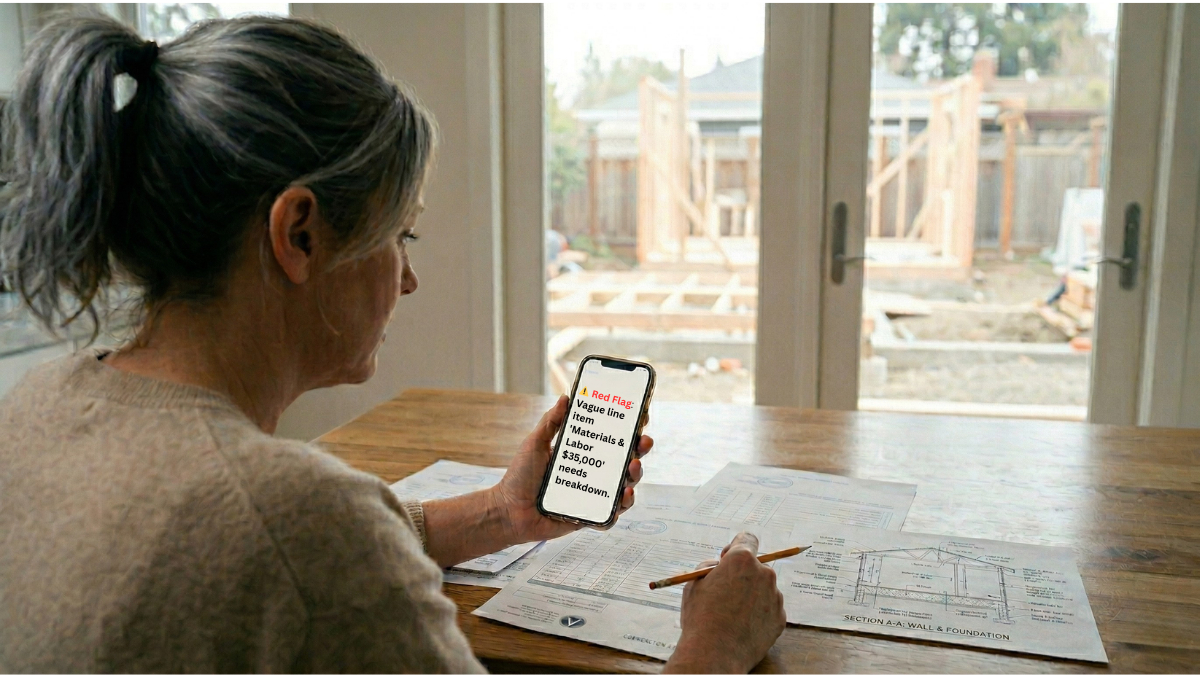
I’m installing a new AC system and building an 800-square-foot accessory dwelling unit (ADU) on my property. At the same time.
Two contractors. Tons of bids. More line items than I care to count. And one very clear reality: One wrong signature and I’m out tens of thousands of dollars with no recourse.
So I pulled up AI before signing anything.
🔍 Before the bid arrives
Most people wait until the estimate lands to start asking questions. That’s too late. You’re already reacting instead of leading.
Before your contractor shows up, open ChatGPT, Claude, Gemini or Grok and paste this prompt:
“You are a licensed contractor and home renovation expert. I’m getting bids for [your project]. What should every legitimate bid include? What line items are commonly left out to make the price look lower? What are the top three red flags I should watch for? What questions should I ask before I sign anything?”
You’ll walk in knowing exactly what a complete bid looks like. Contractors notice when you know what you’re talking about. It changes how they treat you.
📋 After the bid arrives
Upload the bid or photos of it. Then paste this:
“You are a licensed contractor reviewing a bid on my behalf. Here is the bid I received. Flag any vague line items and anything missing that should be included. Check the payment schedule and tell me whether it protects me or the contractor. Check this against [your state] residential contracting laws. Look for the contractor license number, the three-day right to cancel notice and any Prompt Payment Act violations. Flag if permit fees, utility trenching or electrical panel upgrades are excluded or listed as ‘allowances’ instead of fixed costs. Tell me what to push back on before I sign.”
I ran this on my AC bid. AI flagged two line items listed only as “materials and labor” with zero breakdown. It caught a payment schedule that front-loaded 60% before work started. It spotted that a permit line was missing entirely.
And it reminded me to request a conditional lien waiver with every payment. That’s the document that protects you if your general contractor stiffs a subcontractor and the sub comes after your house. (Yes, that’s a real thing.)
Watch for the word “allowances” anywhere in a bid. If it says “$2,000 for flooring” but you want flooring that costs $5,000, you owe the difference. Every penny. That’s not a mistake. That’s a lowball number designed to win the job.
One more thing.
Ask your contractor this before you sign: “What’s the one thing that usually fails inspection in this zip code, and is the fix included in your price?” AI doesn’t know if your local inspector is famously picky about HVAC duct sealing. Your contractor does.
Your move this week: Run both prompts before your next contractor conversation. Even if you trust them completely, you’ll ask sharper questions. And sharper questions keep more money in your pocket, where it belongs. I had a contractor joke. But I ran out of material.
📩 Send this to someone who is about to start a home renovation. They need this AI Power Move.