AI can spot if your pet is in pain from one photo. Here’s how to try it tonight.
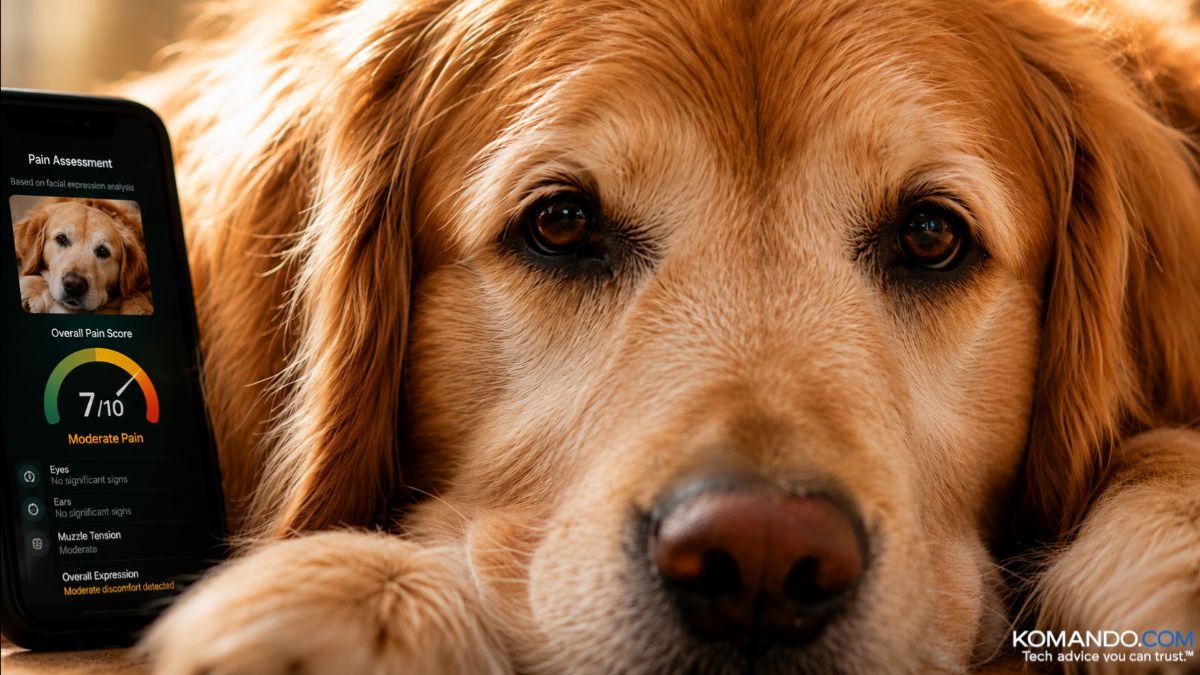
Cats and dogs are experts at hiding pain, and even loving owners miss it. Now the AI on your phone can read the tiny signs right off their face. Here’s the free way to try it, plus when to skip the app and call the vet.
⚡ TL;DR
- Pets hide pain on instinct. Even loving owners miss it until something’s been going on a while.
- AI trained on vet “grimace scales” can read pain signs off a single photo with over 95% accuracy.
- Here’s how to try it tonight, and when to skip the app and call the vet instead.
📖 Read time: 2 minutes




 ChatGPT/Kim Komando
I need your help: Add Komando.com as a preferred source on Google
My dogs Abby and Bella were splashing around in the pool while my friend Hannah and I tossed a ball. Then I lost sight of Bella.
Abby was on top of her. Bella was under the water. For one second, maybe two, that felt like minutes, my heart stopped. Then her head popped up. She shook off the water, grabbed the ball and took off like nothing had happened.
That’s the thing about our pets. They’re not “just animals.” They’re family. And it only takes one frightening moment to remind you how much they mean.
The trouble is, dogs and cats are masters at hiding pain. In the wild, showing weakness makes you a target, so they instinctively mask discomfort. Cats are especially good at it.
By the time most owners notice something is wrong, a limp, eating less, sleeping more, hiding under the bed, they’ve often been uncomfortable for days. Even the most attentive pet parents miss the early signs.
🙈 Their face knows before you do
Veterinarians developed something called a grimace scale, a checklist of tiny facial changes linked to pain. They look for tightened eyes, changes in ear position, tense whiskers, a tightened muzzle, lowered head position and body posture.
Researchers have trained AI models using the same veterinary pain scales. In studies, these systems have shown impressive accuracy at recognizing signs of pain in animals, sometimes spotting subtle changes people miss. They’re designed to help veterinarians, but they can also give pet owners another perspective at home.
🐾 Try it at home tonight
Snap at least three clear photos at different angles of your pet’s face in good light. A short video is even better. Open ChatGPT, Claude, Gemini or Grok and paste this:
This is of my [cat/dog] that’s [number] years old. Based on veterinary grimace scales, check for signs of pain or discomfort: eye and orbital tension, ear position, whiskers, muzzle tension, head position and posture. Tell me what you notice and whether anything suggests I should call my vet. Don’t reassure me if you’re unsure.
If you have a cat, there’s also a free, research-based app at felinegrimacescale.com.
One important reminder. AI is a second opinion, not a veterinarian. If it says everything looks normal, that doesn’t rule out illness or injury. Trust your instincts. And if your pet is struggling to breathe, collapses, won’t eat or drink, cries out in pain or suddenly acts very differently, skip the app and call your veterinarian immediately.
After Bella’s underwater adventure, I tried the prompt on both dogs. It said Abby looked relaxed but a little tired. Bella? No signs of discomfort whatsoever. Of course, she was already chasing the ball again.
📩 Send this to someone who would do anything for their dog or cat but can’t always tell when something’s wrong.