Stores can tune prices to your location, your history, even your mouse movements. Five moves beat the algorithm at checkout.
Consumer Reports testers caught one dozen eggs selling at five different prices, at the same store, at the same moment. About 75% of grocery items showed different prices to different shoppers, and that can cost a family of four up to $1,200 a year. The FTC found pricing systems that read your location, your abandoned cart and your mouse movements. Here’s how to price-check like the pros.
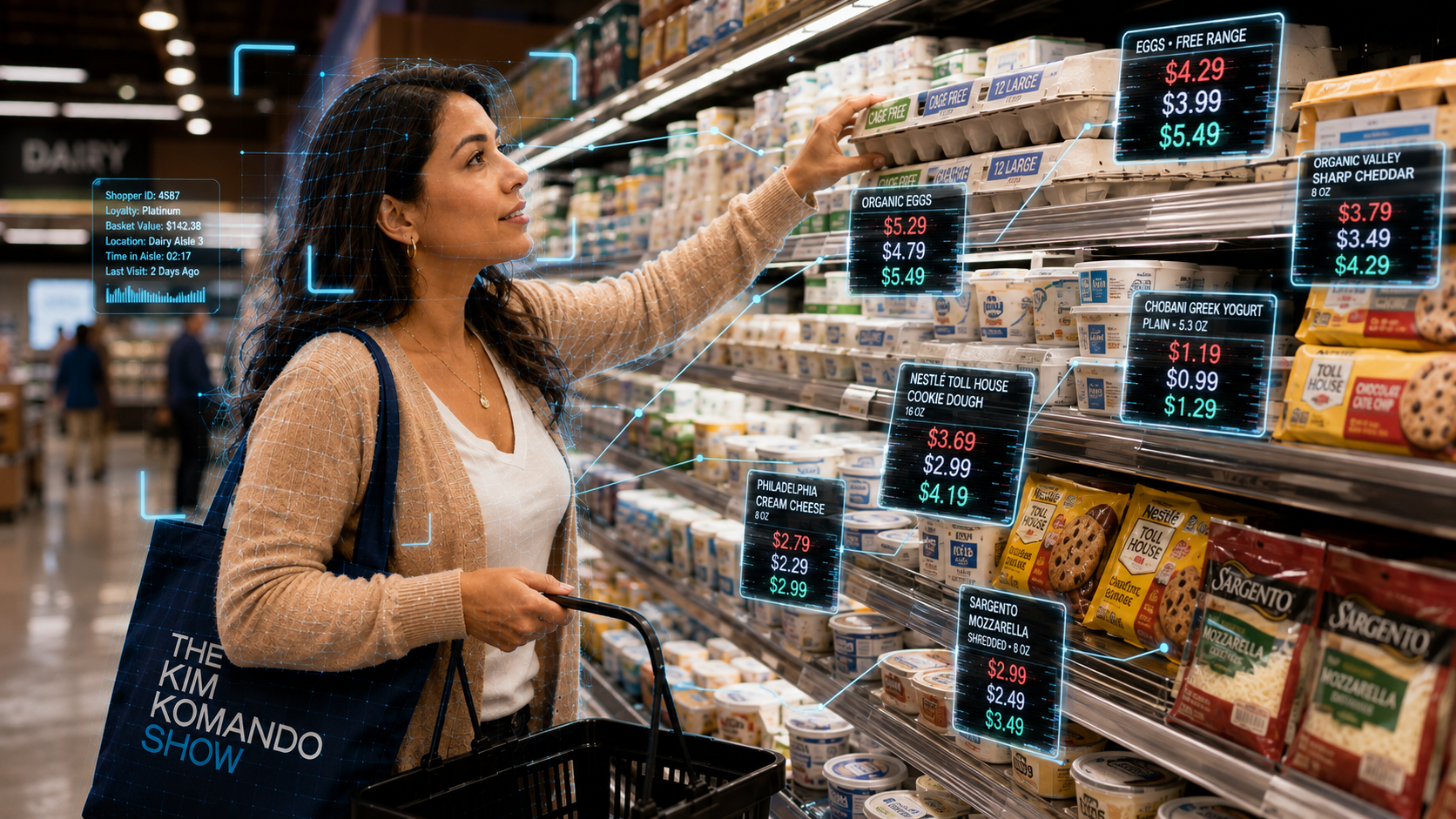
🤯 WOW! One dozen eggs. One store. One moment in time. Five different prices, $3.99 to $4.79, depending on who was looking. Consumer Reports found varying prices on about 75% of grocery items tested, and the FTC says pricing systems can use your location, your cart, even your mouse movements.
📖 Read time: 2 minutes
 ChatGPT/Kim Komando
I need your help: Add Komando.com as a preferred source on Google
One dozen eggs. One Safeway in Washington, D.C. One moment in time. Five different prices, from $3.99 to $4.79, depending on who was looking.
That’s what Consumer Reports found after sending 400 volunteers shopping on Instacart in four cities. About 75% of grocery items showed different prices to different shoppers, same store, same minute. Average gap: 13%. CR figures games like this can cost a family of four up to $1,200 a year.
Welcome to surveillance pricing, where the price tag reads you first. You’re not shopping. You’re being shopped.
🕵️ What they know when you shop
The FTC investigated the companies building these pricing systems (names you know: Mastercard, McKinsey, Accenture). Its report found prices and offers can be tuned using your precise location, browsing history, what’s sitting in your cart, even your mouse movements.
Hover near the checkout too long, and a coupon magically appears. One system flagged new parents. (Congrats on the baby. That’ll be extra.)
And it’s not new. In 2012, Staples showed different prices by zip code, and lower-income neighborhoods often got the higher cost. Orbitz steered Mac users toward pricier hotels.
Sunlight works, though. After CR’s report, the FTC opened a probe, and Instacart shut down its price experiments. Since November, New York requires an on-screen warning: “THIS PRICE WAS SET BY AN ALGORITHM USING YOUR PERSONAL DATA.” Yes, in all caps.
🛡️ Beat the algorithm at checkout
- Price-check two ways. Once logged in, once logged out in a private window. Sometimes the member price really is lower. Fair’s fair. The point is you see both numbers before they pick one for you.
- Check from a clean vantage point. Try a second device. Researchers flip their location with a VPN to see what a price looks like from another city. If the gap is big, you just caught them red-handed. ExpressVPN, a sponsor of my show, offers four extra months if you use my link.*
- Kill precise location for shopping apps. iPhone: Settings > Privacy & Security > Location Services, pick the app, turn off Precise Location. Android: Settings > Location > App permissions. The grocery app doesn’t need to know which aisle you’re standing in.
- Let robots watch the prices. CamelCamelCamel shows any Amazon item’s price history. Google Flights tracks fares. If today’s “40% off” was last month’s everyday price, you’ll know.
- Abandon your cart. Load it up, walk away, wait a day. They built the lingering-shopper coupon to squeeze you. Nobody said you can’t sit on it on purpose.
They can watch my mouse all they want. My wallet plays cat. Five prices for one dozen eggs isn’t a sale. It’s a shell game.
🎯 Send this to someone who paid $4.79 for $3.99 eggs.
📱 Text-worthy: Consumer Reports caught the SAME eggs at the SAME store selling at 5 different prices at once. 75% of grocery items tested showed different prices per shopper, avg 13% apart. Fix: Price-check logged out, turn off precise location and check CamelCamelCamel before “deals.”