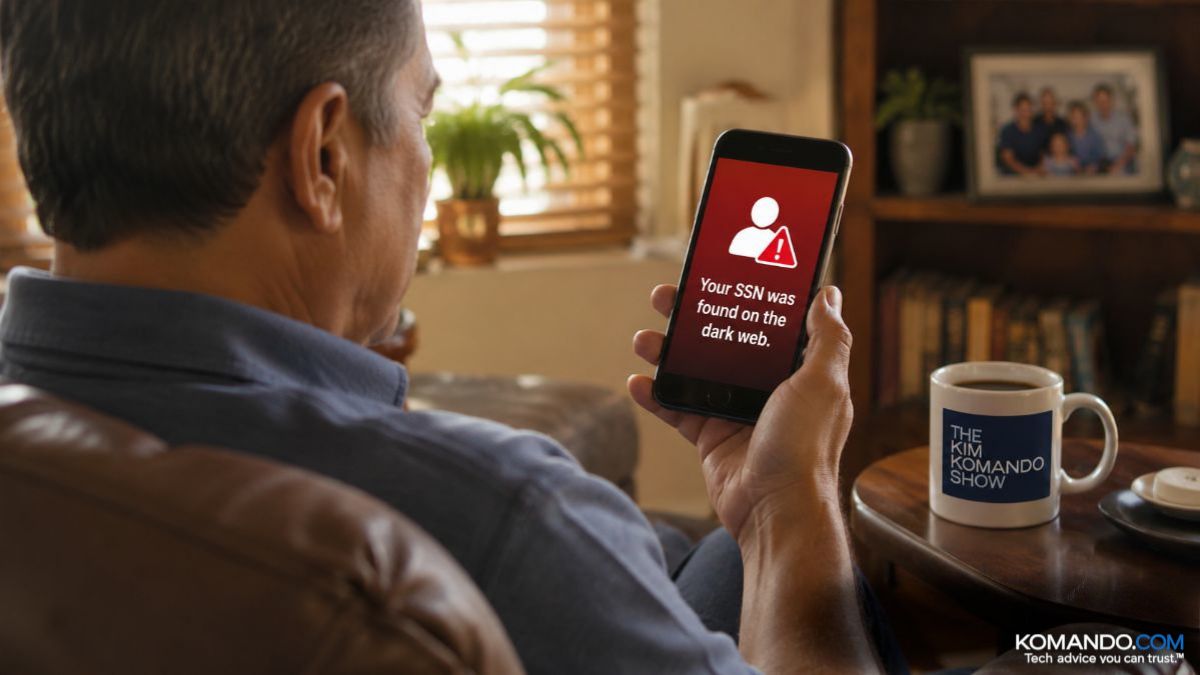
Robert pays for identity monitoring. It told him his SSN was on the dark web, then did nothing.
There are three different products in the identity protection aisle, and the companies would rather you not learn the difference. One watches. One fixes. One pays. Most people buy the cheapest and assume they bought all three.
🤯 WOW: The FTC logged more than 1.1 million identity theft reports in 2024, and Americans reported losing $12.5 billion to fraud, a 25% jump in one year. The monitoring service most people pay for only sends an email alert.
The Short Version: Monitoring watches. Restoration fixes. Insurance pays. Check which service you’re actually buying and how much it covers. Details below.
📖 Read time: 2.5 minutes
 ChatGPT/Kim Komando

Your identity is always at risk, and once it’s gone, it’s gone. Take action now to protect yourself. Learn more at Coveron.com/Kim.
July 14, 2026
“Kim, I pay for one of those identity monitoring services. It starts with an L and ends with K. Last month, it emailed me that my Social Security number was floating around the dark web. Then it sat there. It told me I’d already been robbed and wished me luck. What exactly am I paying for?” — Robert in Dayton
Robert, you’re paying for a smoke detector that beeps after the house burns down.
Here’s what nobody in this business says out loud. Most identity services only watch. They scan the dark web, peek at your credit, and when something goes sideways, they send an alert. That’s the whole product. The beep.
An alert doesn’t undo a thing. It doesn’t call your bank. It doesn’t spend nine hours on hold untangling a fake mortgage in your name. You do.
🔔 There are three products here, not one
Monitoring watches. Restoration fixes. Insurance pays. Most people buy the first service and walk away believing they bought all three.
Monitoring is the cheap part, and your data is already out there anyway. Watching it float by is not a plan. Restoration is a human being who makes the calls, disputes the accounts and clears your name while you go to work. Insurance is the check that covers what the mess costs you.
💰 What to look for
That’s why Coveron caught my eye. (You may know it as NordProtect. Same service, new name since May.) It’s underwritten by HSB, part of Munich Re, rated A++ by AM Best. Not a marketing promise. An actual policy.
Here’s what you’re covered for:
- Up to $1 million in identity theft recovery. Real money, real caseworkers, not a hotline that puts you on hold.
- Up to $50,000 for cyber extortion. When someone locks your files and asks for Bitcoin, you’re not negotiating alone.
- Up to $10,000 for online fraud. Romance scams. Marketplace rip-offs. The stuff that empties accounts quietly.
- 24/7 dark web monitoring, so you find out your info is for sale before the charges start.
- Recovery specialists who do the paperwork. Because after a breach, the hardest part is the 40 hours of phone calls.
A credit freeze won’t stop a romance scam or a QR sticker slapped on a parking meter. Those walk right past good habits.
👉 Right now, Coveron’s protection is 66% off, which puts it at $4.74 a month. That’s less than one drive-thru coffee, and it covers your whole digital life. Lock it down here.
Protection at 4 bucks and change? Now that’s a steal. The good kind.
📩 Send this to someone who brags about their identity protection subscription but has never once read what it actually pays for.