Your car is selling your driving habits, and your insurance bill shows it
A new study of 21 cars and 30 car apps found 19 vehicles leaking data. Here’s what’s tracked, who buys it and how to shut it down.
🤯 WOW! Researchers tested 21 new cars and 30 car apps. Nineteen of those vehicles sent your data to at least one outside company. Every hard brake and late-night drive can land in a profile that insurers buy. And you probably agreed to it without reading a word.
The Short Version: Your car is tattling on your driving, and it can cost you. Steps below.
📖 Read time: 2 minutes
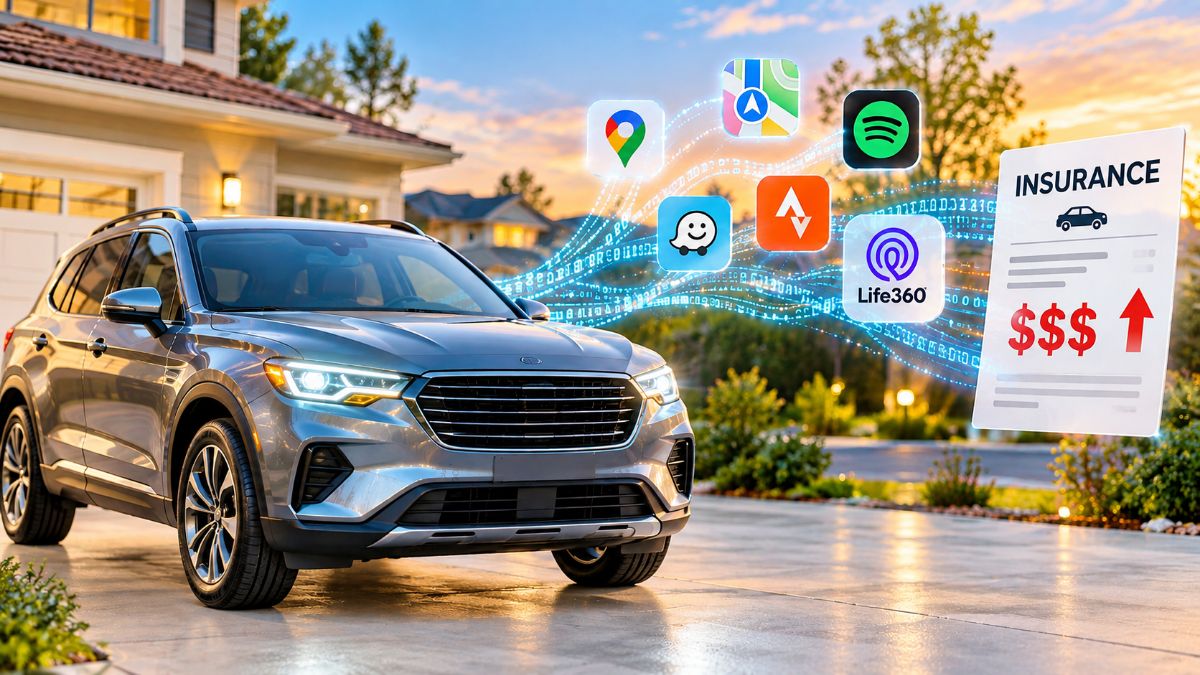 ChatGPT/Kim Komando

If you’re tired of spam calls, unwanted emails and that nasty feeling of always being tracked, Incogni is for you. Go to PrivacyKim.com now for 60% off!
October 5, 2026
Your car knows where you sleep, where you work and how hard you hit the brakes. Now we know who it’s telling.
Researchers at Northeastern University and Consumer Reports tested 21 late-model cars from 17 automakers. They also picked apart 30 car apps.
Nineteen of the 21 cars sent data to at least one outside company. Seven apps handed over VINs, emails, phone numbers or precise location to tracking and ad firms. Pairing the app roughly doubled what reached them. Think Google, Meta and Microsoft.
📜 You clicked ‘I agree’
Nobody reads the fine print. Only 9% of Americans say they always read a privacy policy before agreeing, per Pew Research. That tap in the dealership parking lot? You may have signed off on all of it.
Here’s what’s tracked, and what it costs you. Spoiler, it’s a lot.
We’re talking speed, hard braking, rapid acceleration, late-night trips, miles driven, phone use behind the wheel and where every trip starts and ends.
Data brokers bundle it into a driver profile and sell it to insurers and banks. GM made about $20 million selling driving data before the FTC banned it from sharing with consumer reporting agencies for five years. In Maryland, 24% of drivers in telematics programs saw their premiums go up at renewal. That’s your cash walking out the door.
🔒 Lock it down
Before you pair, open your car’s app and find Settings > Privacy. Say no to data sharing, marketing and “driving behavior” programs.
- On iPhone, go to Settings > Privacy & Security > Tracking and turn off Allow Apps to Request to Track.
- On Android, go to Settings > Security & privacy > Ads and tap Delete advertising ID.
📢 The best move
Take steps now to stop new leaks. The old stuff? Brokers are still selling it.
Incogni’s free exposure scanner shows which people-search sites list your name, address and phone number. Run your free scan here.
Then make those sites delete it. I’ve used Incogni for that since October 2023. Get 60% off with code KIM60.
Here’s what you get:
- Automated removals from 420+ data brokers and people search sites
- Recurring requests, so brokers can’t quietly relist you
- Removal of multiple emails, addresses and phone numbers
- Unlimited plan adds custom removals from 3,000+ more sites, plus live phone support
- Family plans cover up to 5 people
- Dashboard and regular privacy reports
- Removals independently assessed by Deloitte
- 30-day money-back guarantee
🗣️ Text/post this stat: Only 9% of Americans always read a privacy policy, and your car is counting on it. Get the fix at GetKim.com.
📩 Send this to someone who just bought a new car and paired the app in the dealership parking lot.