Medical identity theft is the one type that doesn’t just wreck your finances. It can wreck your health.
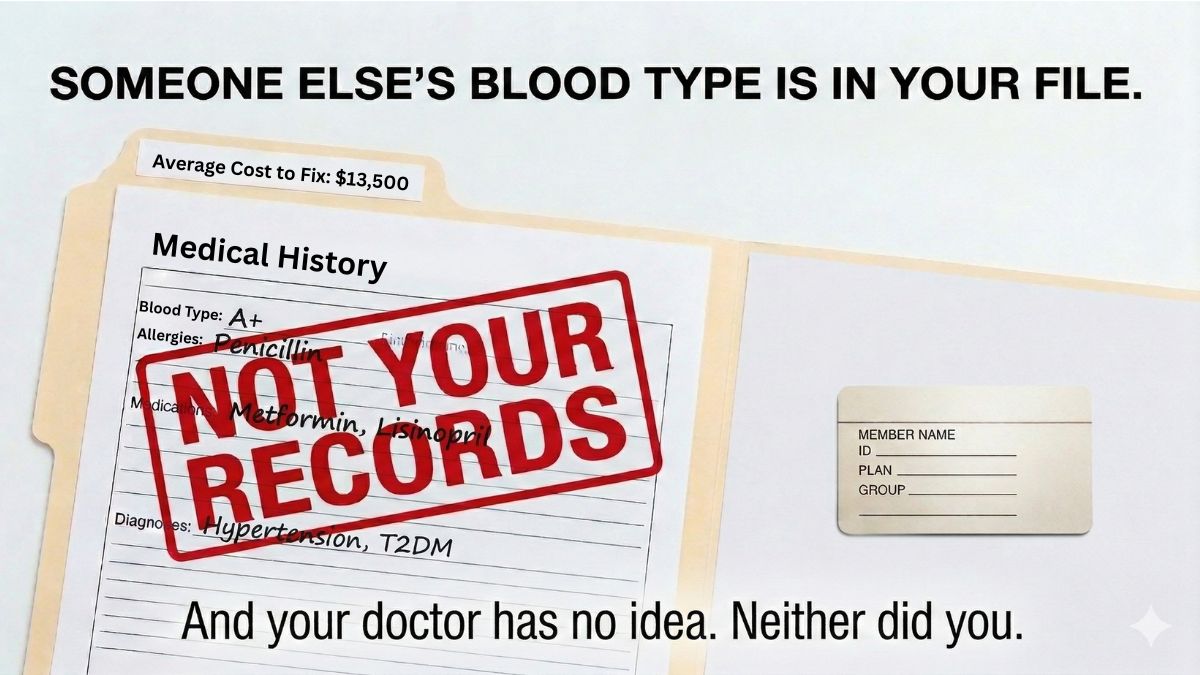
Someone uses your insurance to get surgery. Now their blood type, their allergies, their diagnoses are in your medical file. Your doctor thinks that’s your history. It isn’t.
⚡ TL;DR
- Medical identity theft happens when someone uses your name and insurance to get surgeries, prescriptions or treatments. Their info lives in your records.
- The average victim spends $13,500 and 210 hours to fix it.
- The most dangerous part is when doctors treat you based on someone else’s history.
📖 Read time: 3 minutes
 Gemini

Your identity is always at risk, and once it’s gone, it’s gone. Take action now to protect yourself. Learn more at Coveron.com/Kim.
March 22, 2026
You watch your bank accounts. You check your credit card statements. You’ve got fraud alerts set up. You think you know what identity theft looks like.
You don’t. Not this kind.
Medical identity theft doesn’t show up on your credit report. It doesn’t trigger a fraud alert. It looks like a billing error. By the time most people realize what happened, someone else’s blood type is in their permanent file.
🩺 Here’s how it works
Criminals use your name, SSN and insurance to get surgery, chemo, prescriptions and emergency care. They get the treatment. You get the bill. And something far more dangerous. You get their medical history under your name.
The World Privacy Forum calls this “the information crime that can kill you.” If you walk into an emergency room and your file shows the wrong blood type, a drug allergy that isn’t yours or a diagnosis that changes how a doctor treats you, the consequences aren’t financial. They’re fatal.
More than 2 million Americans have been victims. Average out-of-pocket cost: $13,500. Average time to untangle it: 210 hours. Getting false info removed from your medical record is a legal process that drags on for years.
🔒 Do these three things this week
1. Read every Explanation of Benefits your insurer sends. It’s not a bill. It’s a summary of every claim processed in your name. One procedure you don’t recognize is your first alert. Log into your insurer’s portal anytime to pull them up.
2. Request your medical records once a year. You’re legally entitled under HIPAA, and it’s free. Most providers use MyChart. Log in, find Health Summary or Medical Records, and look for anything that doesn’t match your history.
3. Guard your insurance card like cash. Don’t photograph it. Don’t text it. Don’t give the number to anyone who called you. Your health insurance number sells for up to $500 on the dark web. Your credit card number? About $5.
Turns out your insurance card is worth more than you think. Unfortunately, criminals do know what it’s worth.
🧠 Pro tip for constant protection
After all the data breaches, your information is already out there somewhere. I don’t say that to scare you. I say it because you deserve to know.
NordProtect monitors the dark web for your personal data, including your insurance and medical information, and alerts you before someone else’s blood type ends up in your file. I used to have LifeLock, but it got so expensive.
I did free trials for several ID theft protection services and was thrilled to discover NordProtect’s features and affordable price. That’s how they became a sponsor of my shows.
✅ Set up NordProtect today. Right now. Get 66% off, only $4.74/month.* This is one of those things you’ll either do before something bad happens or wish you had after.