Your $120 copay might be hiding an $8 cash price. Six words at the pharmacy counter unlock it.
As an Amazon Associate, some links pay us a commission at no extra cost to you. Keeps this website free. Thank you.
USC researchers found you overpay on nearly 1 in 4 prescriptions, because a middleman sets your copay higher than the drug's real price and pockets the difference. Pharmacists couldn't tell you until 2018, and still aren't required to bring it up. The six-word question, price-check apps and no-middleman pharmacies inside.
🤯 WOW! That $120 copay? The cash price on the same prescription might be a lot less. USC researchers found the copay costs more than the drug itself on nearly 1 in 4 prescriptions, and the middleman keeps the difference. Your pharmacist knows. They’re not required to tell you.
📖 Read time: 2 minutes




 ChatGPT/Kim Komando
I need your help: Add Komando.com as a preferred source on Google
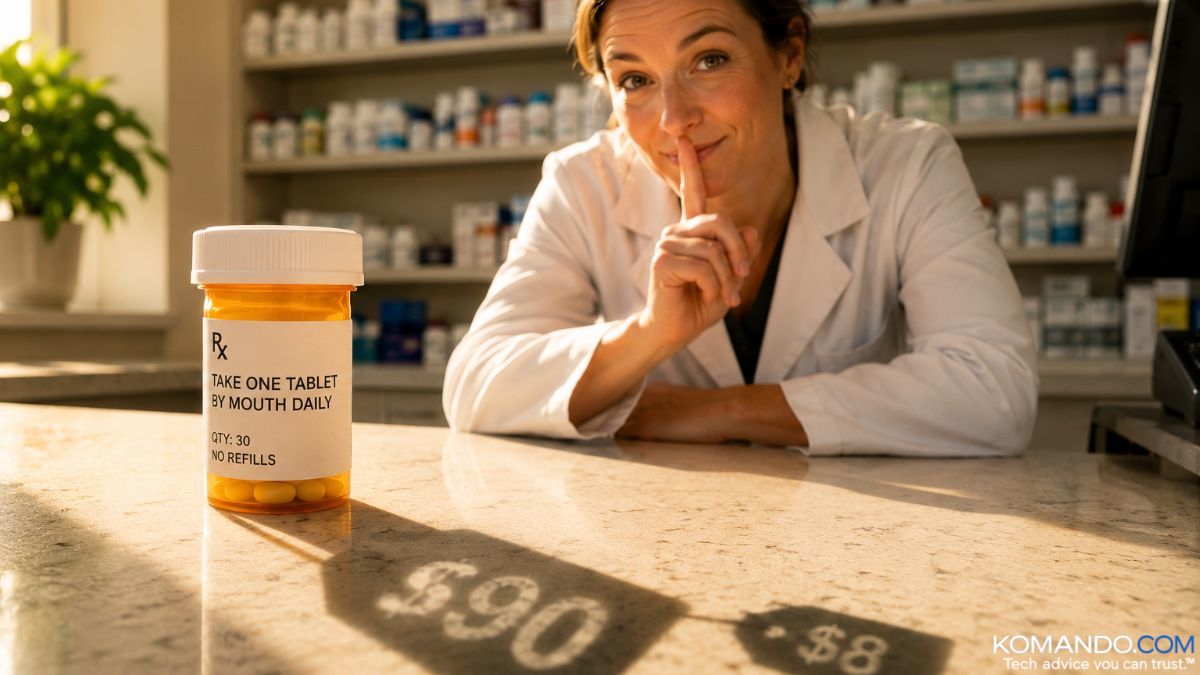
I was at the pharmacy counter picking up my eyedrops. It’s a morning ritual for me and the corneal transplant in my right eye. The tech says, “$120 with your insurance.” The cash price? $8.
That’s not a fluke. That’s a business model.
💊 Prescription pressure
Here’s the scheme. Between your insurance card and the pharmacy sits a middleman called a PBM, a pharmacy benefit manager. Sometimes your copay is set higher than the drug’s real price, and the middleman pockets the difference.
It’s called a clawback, and USC researchers found you overpay on nearly 1 in 4 prescriptions. On generics, it happens even more often. One PBS-covered case: a $285 copay on a drug that cost $40 cash.
For years, PBM contracts gagged pharmacists. They weren’t allowed to volunteer the cheaper price. Congress banned those gag clauses in 2018, but read the fine print of that law: Your pharmacist is allowed to tell you. Nothing requires them to bring it up.
The silence is legal. Which means the question is on you.
💰 The $112 question
- Say these six words every time: “What’s the cash price on this?” Then the follow-up: “Would a discount card beat my copay?” Pharmacists answer honest questions honestly. They don’t start the conversation for you.
- Check prices before you drive. GoodRx and SingleCare show cash and coupon prices at every pharmacy near you. Same pill, wildly different prices: A generic can be $12 at one chain and $47 across the street.
- Try the no-middleman pharmacies. Mark Cuban’s Cost Plus Drugs sells generics at cost plus 15% and a few bucks for shipping. Amazon Pharmacy shows your with-insurance and without-insurance price side by side. Novel concept, showing you both numbers.
- FYI, the catch: Cash purchases usually don’t count toward your insurance deductible. Close to hitting yours? Run the math before you switch. And keep receipts, some insurers let you submit them.
One more thing. Never feel weird asking. The pharmacist isn’t the villain here, they hate the middlemen more than you do. Washington is finally investigating the PBMs, but your refill can’t wait for a Senate hearing.
Ask the question this week. The savings are easy to swallow.
🎯 Send this to someone who takes a daily prescription and has never asked what it actually costs.
📱 Text-worthy: PSA: Your prescription COPAY can cost more than the drug’s cash price. It happens on ~1 in 4 prescriptions (USC study), and the middleman keeps the difference. Pharmacists aren’t required to volunteer that info. Ask “What’s the cash price on this?” every time, and check GoodRx or Cost Plus Drugs first. GetKim.com