



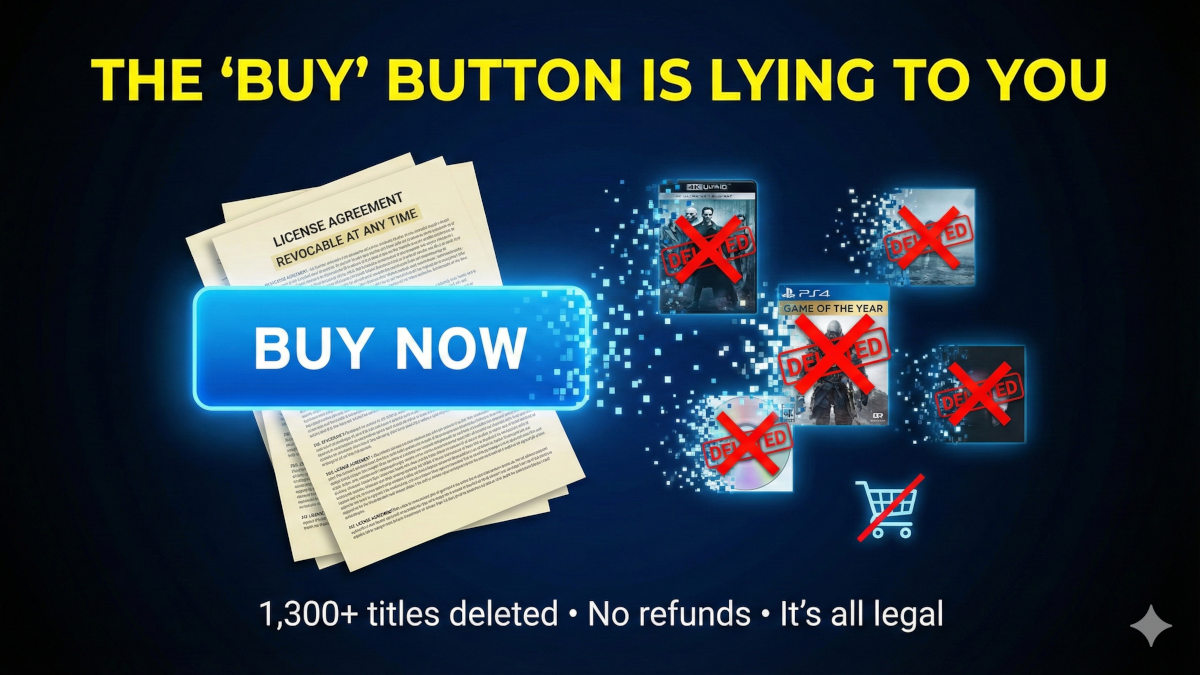
You’ve got a hundred movies on Apple TV. Paid $15 to $20 each. Maybe $1,500 worth of films you think you own. Except you don’t. So many people don’t know that all you bought was a revocable license to stream them until a licensing deal dies. Then your purchase dies with it.
Sony told PlayStation customers it was deleting over 1,300 Discovery shows from their libraries, including ones they’d paid for. Sony walked that back after the backlash, but the mask slipped.
Apple and Amazon Prime folks have watched movies vanish with no refund. Ubisoft killed the video game The Crew entirely and disabled the download button, so even people who already paid couldn’t reinstall it.
That’s the new trend. Delisted means gone, even from your own library.
📺 The fine print
Steam’s terms say your games are licensed, not sold. Amazon says it can’t be held liable if digital content becomes unavailable. Apple’s terms say you’re responsible for backing up content, though copyright protections make it impossible to back up 4K movies. You can only download a lower-quality 1080p version. They’ve trapped you.
California’s AB 2426 makes digital stores stop pretending. They have to admit you’re buying a license, not a product. Big Tech didn’t want two different stores, so now everyone nationwide sees the warning. That’s one win.
🛡️ How to really own it
Since buying digital is renting with extra steps, you might as well actually rent. A $6 rental hurts less than a $20 purchase that vanishes.
Better yet, watch for free. Tubi, Pluto TV, Freevee, YouTube and the Roku Channel have thousands of movies with ads. The catch? These services track every show you watch, how long you watch, when you pause, what you skip, then they sell that data to advertisers and brokers. Your viewing habits reveal more than you think: health concerns, political leanings, relationship status.
Your local library card gets you Kanopy and Hoopla, free streaming, no commercials, legal.
If you truly want to own something:
- Go DRM-free. Buy games on GOG.com or music on Bandcamp. Real files, yours forever. Downsides: smaller selection, no big new releases.
- Build a personal server. Run Plex on a Synology NAS. No CEO can delete your files. Downsides: $200+ up front, you handle backups. It’s a pain.
- Buy physical and rip it. DVDs and Blu-rays can’t be revoked. Use MakeMKV to copy discs to your server, Netflix convenience with the permanence of plastic. Downsides: legal gray area, takes a ton of time.
The stuff on your shelf is yours. The stuff in your cloud is a rental with a Buy button. Now you know the difference.
I wasn’t sure that Netflix would ever find success producing their own content. Then again, Stranger Things have happened. (lol)
📣 Share this: Know someone with hundreds of purchased movies or games? Share this before their library disappears. Use the Facebook, X, LinkedIn or email icons below.