The scam email opens with a photo of your front door, then asks for $1,950. Here’s how they got your house and how to make it disappear.
Scammers grab your address from a people-search site, pull your house from Google Street View and mail you a threat with your own driveway on it. Nobody hacked your webcam, friend. Here’s what to do and how to cut off their supply.
🤯 WOW! The email starts with a photo of your house. It names you, names your street and demands $1,950 in Bitcoin. The photo came from Google Street View. And your name, address and email came from a people-search site that sells them for a few dollars.
📖 Read time: 2.5 minutes
 ChatGPT/Kim Komando

If you’re tired of spam calls, unwanted emails and that nasty feeling of always being tracked, Incogni is for you. Go to PrivacyKim.com now for 60% off!
September 24, 2026
I need your help: Add Komando.com as a preferred source on Google
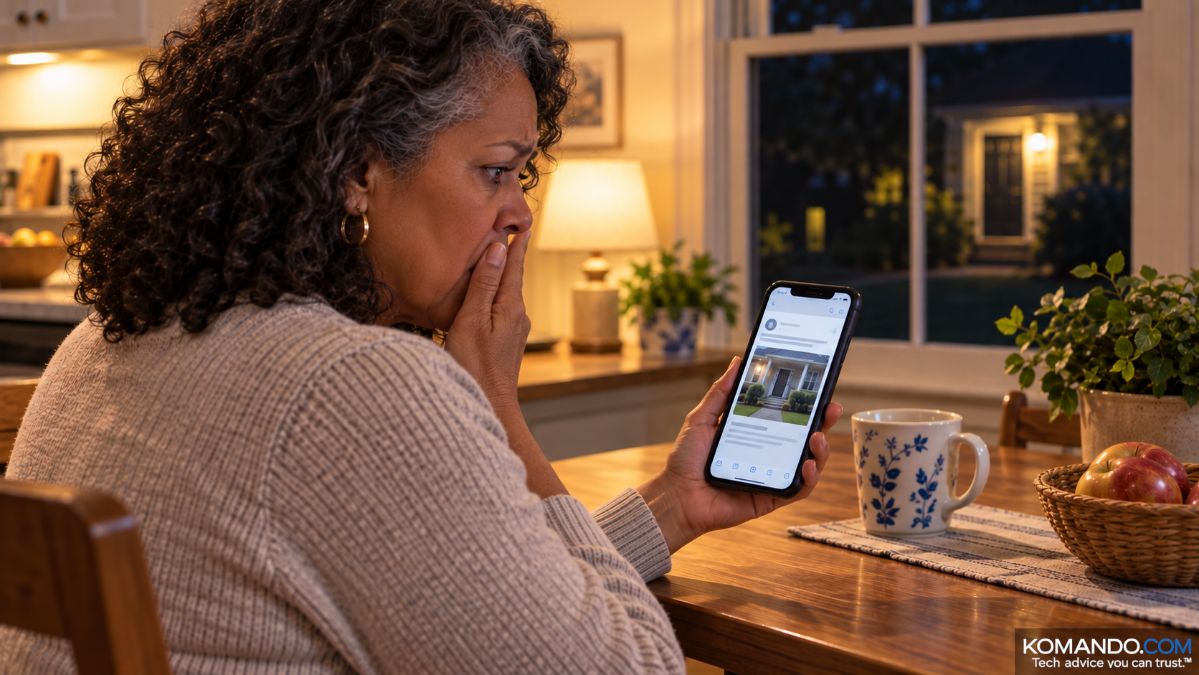
This scam is spreading faster than ever. You open an email, and the first thing you see is your own front door.
Then your full name. Your street. A line that says, “Is visiting [your address] a more convenient way to contact if you don’t take action? Nice location btw.” Then the pitch: They’ve been watching you through your webcam, they have video, but $1,950 in Bitcoin by tomorrow makes it go away. There’s a QR code to pay.
Security reporter Brian Krebs flagged the pattern in September 2024. It never stopped, because it works. Last week, the FBI put a number on the bigger family of “we know where you live” scams: 61,000 complaints, $1.6 billion lost.
🏠 How they got your house
Nobody hacked anything. Here’s the recipe.
Step 1: a leaked email list. An online breach of a business compromises customer data.
Step 2: a people-search site. Type an email or a name into one of those “find anyone” pages, and you get a home address, age, relatives, sometimes the spouse’s name. Costs a few dollars, or nothing.
Step 3: a map site. AI pastes the address into Google Maps, screenshots Street View, drops it in an email and personalizes it.
That’s the whole trick. The photo feels like proof. It’s a Google search.
With AI’s help, scammers can crank out personalized bogus mails by the thousands in seconds. Literally.
🧹 Make yourself a worse target
- Don’t reply, don’t pay, don’t scan the QR code. Paying confirms you’ll pay. Report it at ic3.gov. Five minutes, and the FBI reads them.
- Blur your house. Open Google Maps, find your address, click the Street View photo, then report a problem in the bottom corner. Pick “my home” and submit. Google blurs it. The catch? Once you blur your home, you cannot unblur it.
- Cut off the supply. Scammers start by buying your address from a data broker. You can send removal requests to over 400 of these sites yourself. Good luck with that. And you’ll have to repeat the process every few months when they put you back on the list. Or you can have it done for you.
👀 Free scan shows what’s out there about you
Incogni offers you a free exposure scan, which takes one email address and no account. In about a minute, it shows you which people-search sites are selling your name, phone, date of birth, home address and the names of the people you live with.
That’s the same list the guy with the Street View photo shopped from. Don’t guess. Look.
 Kim Komando
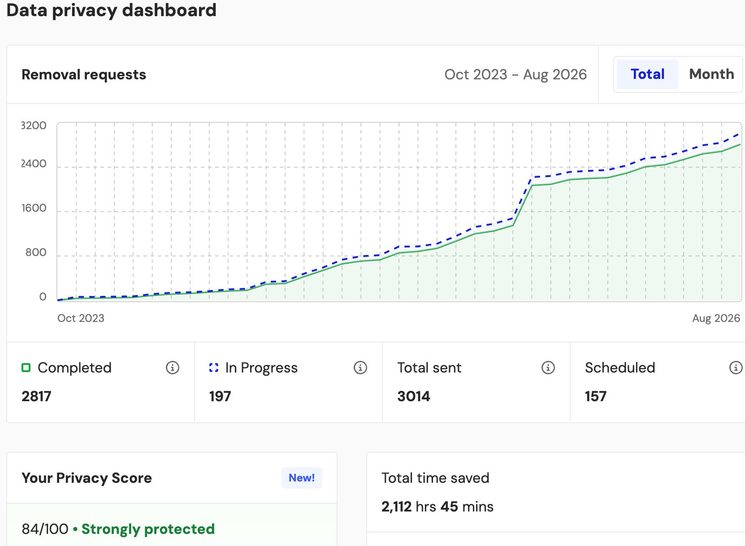
Then make it stop. I tested this myself. That’s my dashboard above. Since I signed up, Incogni has sent 3,014 removal requests on my behalf. Not three. Not 30. More than 3,000, and 157 more are already scheduled, because the brokers relist you. Incogni goes right back at them. Look at the chart, the line never flattens.
That’s what it takes to stay off these sites, and it’s why nobody keeps up by hand. Incogni says that’s 2,112 hours of my life I didn’t spend filling opt-out forms. I believe it.
✅ My readers get 60% off with code KIM60 at this link. Sign up today. You are not going to regret this one bit!
📩 Send this to someone who got an email with their own house in it and hasn’t slept since.