



Here’s what nobody tells you about these new “protect the kids” internet laws.
They don’t protect the kids. No one else is talking about this.
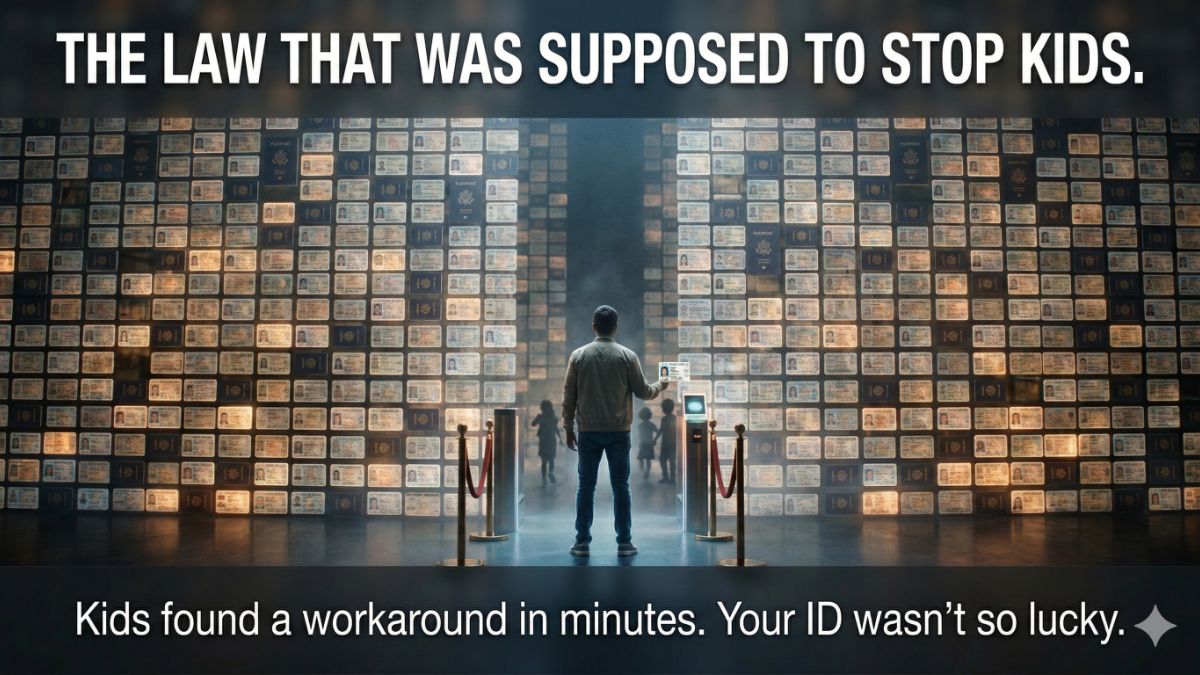
Researchers from the New York Center for Social Media and Politics tracked what happened after states started requiring age verification to get online. Kids didn’t stop. They googled “how to get around age verification,” downloaded a VPN and kept scrolling.
After Florida’s law took effect, VPN demand shot up 1,150%.
The kids are fine. You’re the one with a problem.
🪪 You’re not showing your ID to Instagram
Here’s what happens when you hit one of those age verification screens. You’re not dealing with Instagram or TikTok. You’re handing your government ID, your face scan or both to a third-party company the site quietly hired to do the dirty work.
Companies like Jumio, Socure and AU10TIX. Never heard of them? You will now.
These vendors collect your data. Store it. Run it through AI facial recognition. And they’re massive targets for hackers, because they’re sitting on identity documents for millions of people across hundreds of websites.
This already went wrong. A women’s safety dating app called Tea used one of these vendors and suffered a breach that exposed hundreds of ID photos and personal records. Not hypothetical. It happened.
The fine print nobody reads? In some states, law enforcement can request the data these vendors collect. You verified your age to watch a YouTube video. Now your face is in a compliance database.
Argh.
🔒 What to do when you hit a verification gate
Not all checkpoints are equal.
- Choose the least invasive option. A selfie-based age estimate is far less risky than uploading your actual driver’s license. Take the lighter option every time.
- Google the vendor first. The company running the check is usually named in small print below the box. Search that name plus “breach” before you scan anything.
- Never upload your real ID if a selfie works. Document upload is your last resort. Not your default.
- Look for an alternative. Some platforms let you verify through your Apple or Google account instead. That keeps your ID out of a third-party database entirely.
- If a site demands full government ID to browse basic content? Hard pass. Close the tab.
FYI, Discord announced age verification using on-device facial analysis, with data deleted immediately after the check. That’s the right model. Most vendors aren’t there yet.
The law was supposed to protect your kids. Instead it built a database of your face, run by companies you’ve never heard of. Your kid cracked the workaround in 45 seconds. You handed over your driver’s license.
Turns out these laws didn’t quite ID the real problem.
📩 Send this to someone who thinks these laws are keeping their teens safe. Forward this. They’re going to want to know the truth. Use the handy icons below.