



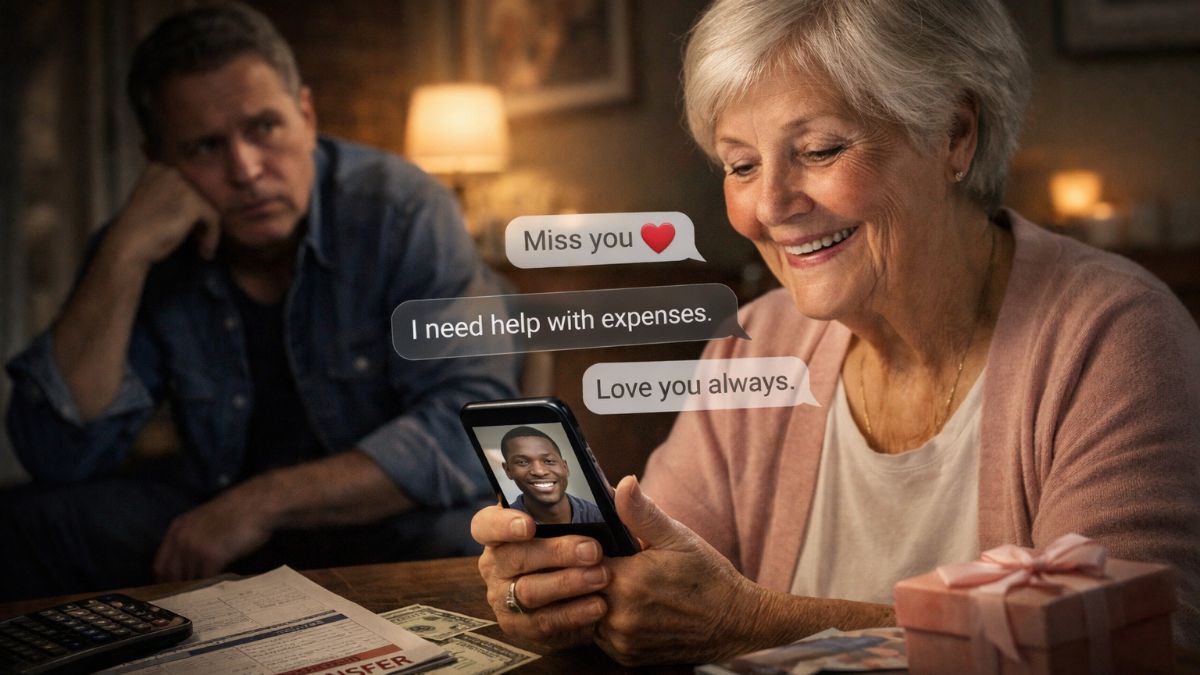
Chris (not his real name) knows exactly what’s happening. And he can’t stop it.
His 78-year-old mom has been chatting every single day with a man she met online almost five years ago. He’s almost 30 years younger. He lives in Nigeria and says he’s in love. He’s promised to visit her four times. Four times, something came up. He got sick. His daughter needed him. Work got too busy. The flights never got booked.
She sends him money. She won’t tell Chris how much. But she “likes to help him.”
Chris has shown her the warning signs. Offered to pay for counseling. Sat across the table from her, heart in his throat, and explained as gently as he could: Mom, this isn’t real.
She gets angry. She gets hurt. She yells at Chris.
So Chris made a painful decision. He stopped bringing it up. Not because he thinks she’s safe. Because he wants to keep his mother in his life.
“I’ve had to let her live the fantasy,” he told me. “What else can I do?”
His mom isn’t naive. She’s a warm, intelligent woman who found something that made her feel seen and valued. That’s not a character flaw. That’s human nature. And scammers know how to exploit it.
🎣 Here’s how it works
Experts call it “friendship fraud.” It starts in a Facebook group, a Words with Friends game or comment section. The scammer studies your posts, finds your interests and slides in talking about those very things. They chat every day. They remember your kids’ and grandchildren’s names. Then, weeks or months in, the asks start. Medical bills. A sick relative. Travel costs to visit. Always a good reason.
They feel real. Scammers use AI-generated photos, deepfake video calls and scripts refined by pros. You’re not getting a clumsy email full of typos anymore. You’re up against a full-time operation that has studied human psychology for years.
Older Americans lost $2.4 billion to scams in 2024. But the FTC says the real number, accounting for underreporting, is somewhere between $10 billion and $81.5 billion. More than half of victims never reported it at all.
🔒 How to stop scammers
- Upload their photo to Google Images or TinEye. Stolen from someone else? You’ll know in 10 seconds. If your loved one is being targeted, you should check the picture together, casually. Frame it as interesting, not accusatory.
- Talk about scams in general, not theirs specifically. “I read this story about a woman who…” Plant seeds. Don’t trigger defensiveness.
- If money has already gone: Report it to the FTC at ReportFraud.ftc.gov, and call the AARP Fraud Watch Helpline at 877-908-3360.
As for Chris? He keeps showing up for his mom. Keeps the relationship warm. Keeps patiently asking questions. That’s not giving up. That’s love.
💌 Wait. Is this your story? If you’re reading this and something feels a little too familiar, I want to know. Whether it’s you, your mom, your dad, a friend. You don’t have to figure this out alone. Click here and tell me what’s happening. I read every single one. I want to help.