Data brokers are selling lists of the recently widowed, diagnosed and broke. Here’s who’s buying.
It’s not your credit score they want. It’s your worst moment. Already packaged. Already sold.
⚡ TL;DR: Key takeaways
- Data brokers sell “life event” lists of people going through divorce, bankruptcy, bereavement and serious illness.
- Predatory lenders and scammers are the buyers.
- The government confirmed this and named the lists out loud. Here’s what to do about it right now.
📖 Read time: 2.5 minutes
 Gemini

If you’re tired of spam calls, unwanted emails and that nasty feeling of always being tracked, Incogni is for you. Go to PrivacyKim.com now for 60% off!
March 15, 2026
Imagine the worst thing that ever happened to you or a family member.
A cancer diagnosis. A bankruptcy. The death of your spouse. A divorce you didn’t see coming.
Now imagine that within days of that moment, your name, home address and medical situation were packaged into a spreadsheet and sold to whoever had a credit card and a reason to exploit you.
That’s not a hypothetical. That’s Tuesday in the data broker industry. You can make it stop.
🎯 The lists have horrible names
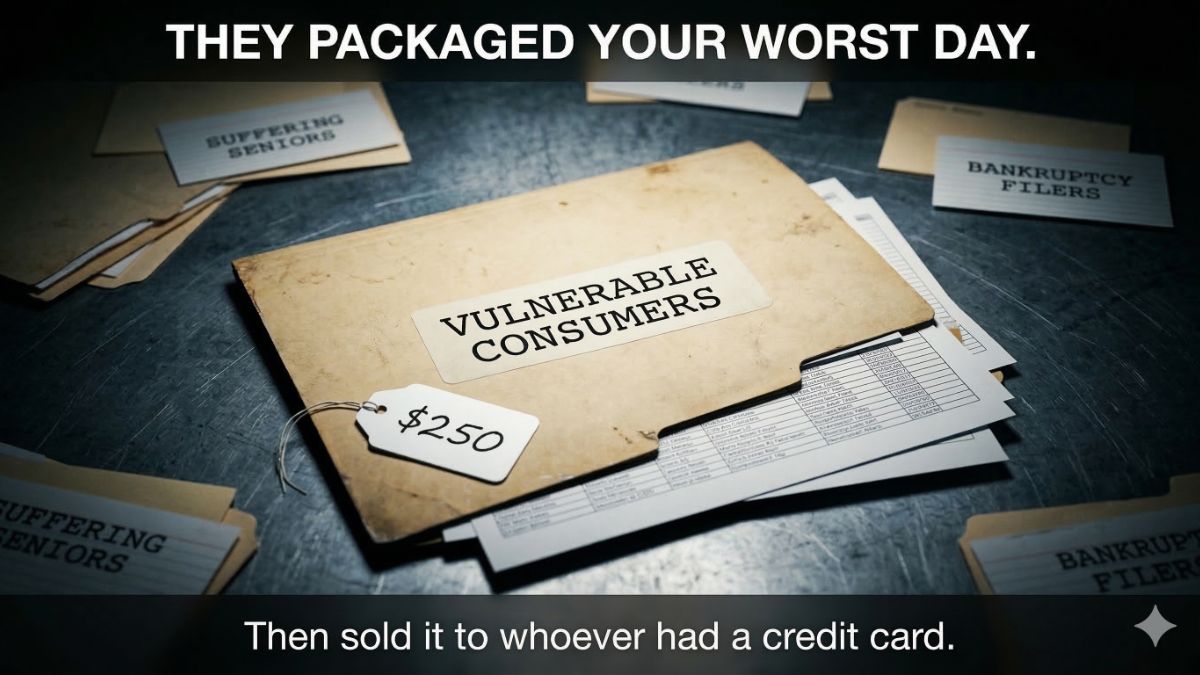
The Consumer Financial Protection Bureau finally pulled back the curtain on what these lists are actually called. Not “consumer segments.” Not “audience profiles.”
The real names brokers advertise to buyers: “Suffering Seniors.” “Cash Cows: Underbanked File.” “Paycheck to Paycheck Consumers.” “Bankruptcy Filers.” “Suckers.” (I made that last one up, but I’d bet money it exists.)
That’s not a marketing deck. That’s a product menu, and your worst day is the product.
A Duke University study confirmed researchers could purchase from data brokers lists of people sorted by diagnosis. Depression. Cancer. PTSD. Stroke survivors. Race and ethnicity included. Number of children in the home? Also included. Home address? Absolutely included. No prescription required.
Your medical records are protected under HIPAA when your doctor holds them. The moment this information touches a third-party app, that protection is completely gone. Data brokers aren’t covered by HIPAA. They can sell whatever they want, to whomever they want, whenever they want. (Seriously.)
😬 Who’s buying
Predatory lenders buy lists of people in financial distress to pitch 300% interest loans to families already drowning. Scammers specifically buy lists of recently widowed women, because they assume there’s a life insurance payout and someone navigating money alone for the first time.
The Brennan Center for Justice confirmed brokers have sold data directly to predatory loan companies and stalkers. Not accidentally. Not as a side effect. Directly.
That’s not a bug in the system. That’s the business model.
🔒 What to do right now
Start with your phone. Audit every health app you have installed. Delete anything you don’t actively use. For the ones you keep, dig into the privacy settings and opt out of data sharing. Every single one.
Then tackle the brokers holding the rest of your information.
I use Incogni because it automatically sends legal removal requests to more than 420 data brokers on your behalf, including the ones running lists called “Suffering Seniors.”
When brokers re-add your info (and they will, because that’s the game), Incogni sends the requests again, and again, and again. Automatically. Without you lifting a finger.
✅ Use code KIM60 for 60% off. They can’t target you if they can’t find you.
Know someone going through a hard time? A health scare, a job loss, a divorce? Forward this. They’re already on a list. They just don’t know it yet.