Medical devices in your home are quietly reporting on you to your insurer, which can cost you more.
That CPAP machine? It tells your insurance company whether you used it enough. And it’s not the only device in your house keeping score. Here’s what’s phoning home while you sleep and what you can do about it.
⚡ TL;DR
- Modern CPAP machines phone home nightly. If you don’t hit your insurer’s usage target, they can stop paying or make you return the machine.
- Glucose monitors, heart implants and more all collect data that can flow to insurers.
- You probably signed off on this in the fine print. Here’s how to find out and take back control.
📖 Read time: 2.5 minutes
 ChatGPT/Kim Komando
I need your help: Add Komando.com as a preferred source on Google
Barry uses a CPAP. I’ve slept next to that thing for years. Every night sounds like Darth Vader moved in. “(heavy breathing) Luke, I am your father.” I say it every time. Barry rolls his eyes. I crack myself up anyway.
Thirty million Americans sleep with one of these breath catching machines. It’s a lifesaver. It’s also ratting you out.
😴 Use it or lose it
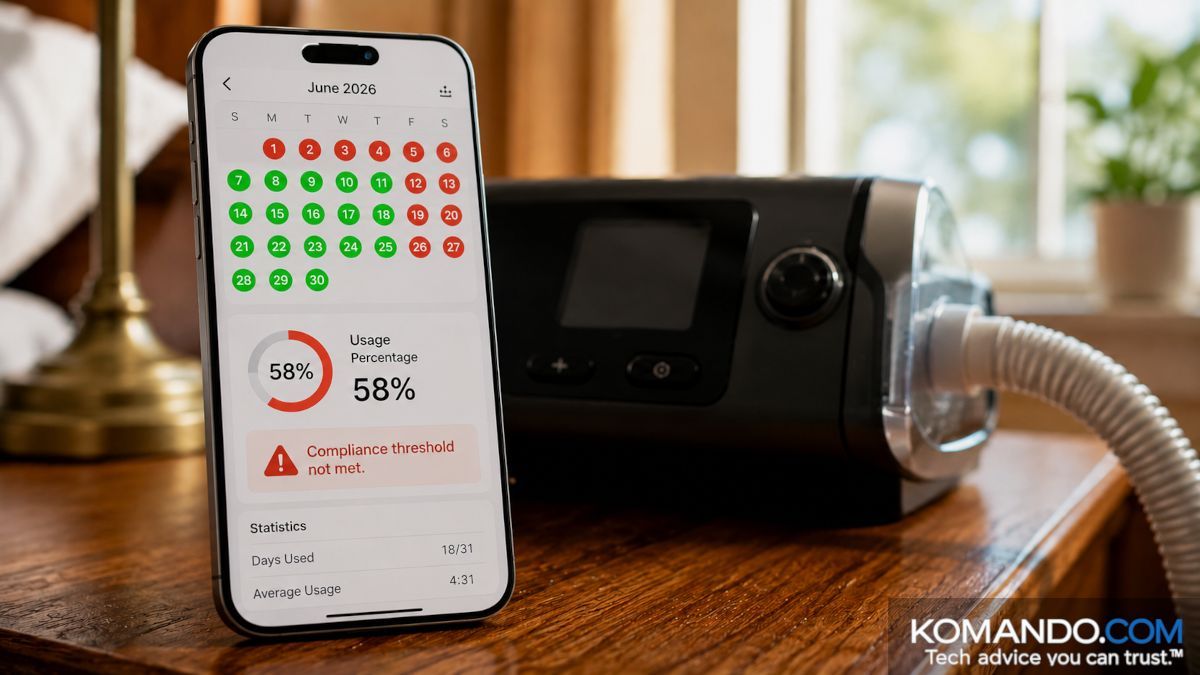
Most insurers demand compliance. The common rule: at least four hours a night, on 70% of nights in a 30-day stretch. Fall short, even because the mask hurt or you’re still adjusting, and they can stop paying. Some people get a return notice and a bill for the full cost, often around $2,500. Yikes.
And the machine tells on you by itself. Newer models like ResMed’s AirSense have a cellular modem built in. No Wi-Fi needed. It beams your hours, mask leaks and breathing events to the cloud after every session.
How’d they get the right? You gave it to them. When insurance pays, you almost always sign a data release buried in the fine print. Tracking isn’t a bug. It’s the deal.
Here’s what stings. A study presented in May at the American Thoracic Society found over a third of patients who missed the compliance cutoff kept using their machines anyway and got healthier. The rules yank coverage from people still benefiting.
🩺 The whole bedroom is keeping score
CPAPs are the loud ones. Blood glucose monitors collect your sugar levels, and insurers often want a month of data before they reimburse. Pacemakers and implanted defibrillators log your heart rhythm 24/7 and transmit automatically. Your cardiologist sees it. Your insurer may, too. Even hearing aids track how many hours you wear them.
FYI, turning the data off usually means losing coverage. That’s not an accident.
🔒 Lock it down:
- Call your equipment supplier and ask: What does my device transmit, and who sees it?
- Ask if a removable data card model is an option, so your doctor confirms compliance, not a faceless algorithm.
- Traveling or camping off the grid? Turn on airplane mode in your machine’s settings. It stores up to a year of data internally and uploads when you’re back in coverage, so a camping trip doesn’t read as quitting.
- Read the data consent form before you sign. The buried paragraph is always the one that matters.
- If privacy is more important to you than the discount, check the cost of buying the device yourself. You’ll control the off switch.
Go ahead and sleep. Just know the machine’s still awake. It doesn’t snore. It narrates.
📩 Send this to someone who uses a CPAP, wears a glucose monitor or has a heart implant and has no idea it’s keeping score.